


Should I Become a Nurse? Discover the Benefits of Being a Nurse & Why Nursing Could Be the Right Career Path for You

There’s no debate about it: nursing is a rewarding career. You are on the frontline of fighting disease, and your contribution to the healthcare system literally saves lives.
At the same time, it is a stable and fairly well-paid job. And the need for nurses is at an all-time high. According to the U.S. Bureau of Labor Statistics, employment of registered nurses is projected to grow 5% (faster than all occupations), with about 189,100 openings each year on average over the decade.
So far, nursing sounds amazing. And then you remember that there is a great deal of responsibility that comes with this profession, the demanding tasks, and the emotional side of the job. You take all these factors into account and find yourself asking: Should I become a nurse? Regardless of whether you are just choosing a career path or if you want to switch to nursing because you no longer find meaning and satisfaction in your current job, we are here to answer some of your most pressing questions about becoming a nurse.
The good, the bad, and the in-between – this guide will discuss all the facets of nursing, so by the end of this piece, you will be better equipped to make an informed and critical decision whether nursing is truly the path for you.

The Benefits of Being a Nurse: Why You Should Pursue Nursing
With great responsibility comes great benefits, and nursing is surely a career rich with them. The road to becoming a nurse might be challenging, but in the end, the benefits make the time, money, and energy invested worth it.
Great Job Outlook
According to the U.S. Bureau of Labor Statistics, employment of registered nurses is projected to grow 5% from 2024 to 2034, faster than the average for all occupations, with about 189,100 openings projected each year on average over the decade. Many of those openings are expected to result from workforce turnover and retirements, while demand for care continues to rise. The nursing workforce is also affected by broader capacity constraints in nursing education: AACN reports that faculty shortages continue to limit schools’ ability to expand enrollment, with aging faculty, budget constraints, and competition from clinical positions all contributing factors.
Because demand for nurses remains strong, the job outlook for the profession is favorable. According to AACN’s latest new graduate employment data, 96% of entry-level BSN graduates and 95% of MSN graduates received job offers within 4 to 6 months of completing their programs. That means students entering nursing school can still feel confident that their degree is likely to lead to employment soon after graduation.
Industry Stability
According to an article in The Atlantic, the healthcare industry is the largest employer in the U.S., with the BLS reporting that private healthcare and social assistance accounted for about 22.5 million jobs in 2024 and is projected to reach about 24.5 million by 2034. Not only that, but healthcare is a stable industry. That makes nursing a comparatively stable profession, though I’d soften the phrase “recession-proof,” since no job is completely immune to economic pressures.
Find out how stable a nursing career is.
Good Compensation
Nurses are also compensated fairly well. According to the BLS, the current average salary for registered nurses was $98,430 per year, or $47.32 per hour. If you choose to advance your education, you will enjoy significantly larger paychecks, with the current average salary of MSN-level professionals (advanced practice registered nurses and nurse practitioners) being $129,480 per year or $62.25 per hour.
Salaries differ by role and state. For a more detailed description, read our nurse salary by state guide.
High Job Satisfaction
Nursing has long been associated with strong career satisfaction, although more recent data show some erosion in those numbers. According to AMN Healthcare’s 2023 Survey of Registered Nurses, nurse career satisfaction dropped to 71% after remaining in the 80% to 85% range for roughly a decade. The shift suggests that many nurses still value their career choice, even as post-pandemic strain, burnout, and workplace pressures have reduced overall satisfaction.
Numerous Career Opportunities
The nursing field is, in fact, tremendously varied. You can pursue careers in both hospital and non-hospital environments; certain career paths will give you more control over your schedule, or you could even choose a career that combines nursing with one of your other biggest passions.
Find out more about the highest-paying nursing jobs and the least stressful nursing careers.
The industry is home to both standard 9-to-5 nursing jobs in clinical settings and a slew of non-clinical, non-bedside positions, as well as some work-from-home roles. The key takeaway is that nursing offers variety and practice options across multiple fields.
Advancement Opportunities
Although it comes with stability, pursuing nursing as a career will also bring numerous opportunities for advancement across a comprehensive career ladder. Professional growth is central to nursing, and continuing education and self-development are key values for nurses across all areas of practice.
The Possibility of Pursuing an Online Education
Nursing allows for studying online (at least partially). If you are considering pursuing your BSN in nursing, you could opt for the blended distance format, which allows learners to engage in online didactic instruction alongside on-the-ground experiential learning. Online learning options are more flexible and career-friendly – you can still learn while working full-time; geographic boundaries do not limit them, and allow you to assimilate information in your own time.

Should You Be a Nurse? Things to Consider Before
As rewarding as this field is, it does come with its own set of challenges. Nursing is a demanding profession, both physically and psychologically. If you’re leaning towards a profession in the nursing field, these are some of the main things you must take into consideration.
Varying Schedule
Depending on your work environment, your shifts could be lengthier and more demanding. Nurses who work in private doctors’ offices might work 8-hour shifts for 5 days a week, but since hospitals are working around the clock, the typical 8-to-5 shift is not really a possibility for RNs working in hospitals. Instead, they might end up working three 12-hour shifts, followed by roughly two to five days off.
12-hour shifts, while indeed exhausting, have their benefits: they provide better continuity (patients are under the care of a different nurse only twice a day), the shortened work-week is generally appealing to nurses, as it can translate into better work-life balance, more flexibility, and more time spent with the family. However, you must also keep in mind that you might be required to work night, weekend, and even holiday shifts.
Challenging Environment
Nurses often work long hours under stressful conditions, which can lead to fatigue, injury, and job dissatisfaction. Other factors make the healthcare environment particularly stressful. There is physical labor involved – from lifting patients and equipment to being on your feet all day with few breaks.
Also, there’s a higher risk of exposure to work-related hazards, such as infectious diseases. Nurses have to deal with understaffing, equipment shortages, longer shifts, and various other pressures. In addition to all of these, because they’re on the front lines of defense, nurses are extremely vulnerable to contracting the virus.
Learn more about what causes nursing burnout and how to avoid it.
The Need for Continuous Education
Even if you’ve already completed your studies, hospitals might require you to follow training in areas such as clinical management, pain management, recognizing child or domestic abuse, or ethics.
AACN reports that about 25% of hospitals and other healthcare settings now require new hires to hold a bachelor’s degree in nursing, while nearly 70% strongly prefer BSN-prepared candidates. That means nurses who begin practice with an ADN may still benefit from completing an RN-to-BSN program to stay competitive for more positions.
How Can You Become a Nurse? From Study to Practice
If you’ve read through all of the above and, in retrospect, you’ve discovered you have the qualities of a good nurse and the benefits of a nursing career outweigh the challenges, you might find yourself wondering how you actually become a nurse.
If that’s the case, keep on reading, and you’ll find everything you need to know to start your career in healthcare.
What Are the Steps to Becoming a Nurse?
Here is the streamlined step-by-step guide to becoming a nurse:
- Earn a high school diploma or GED.
Before beginning nursing school, you need a basic foundation in subjects like math, English, and science. - Choose the right nursing degree path.
The first major step is earning a nursing degree. The path you choose depends on your career goals:
-
- PN Diploma Program (Practical Nursing Diploma): A fast-track option for students who want to enter nursing sooner. This path prepares you to become a practical nurse, often called an LPN or LVN, depending on the state, and is a common starting point for those who may later advance through bridge programs. Find out how to become an LPN/LVN or quickly enroll in the 12-month PN Diploma Program at Nightingale College.
-
- ADN (Associate Degree in Nursing): A common entry point into registered nursing that can qualify you to become an RN. Learn how to get your ADN.
- BSN (Bachelor of Science in Nursing): Often preferred by employers and may open the door to more job opportunities and career advancement. At Nightingale College, you can enroll in the BSN Program and complete your education in just 3 years.
- Complete the prerequisites for your program.
Nursing programs may also have entry requirements and prerequisites that go beyond the completion of general education. Make sure to check and complete them in time. - Complete your nursing education.
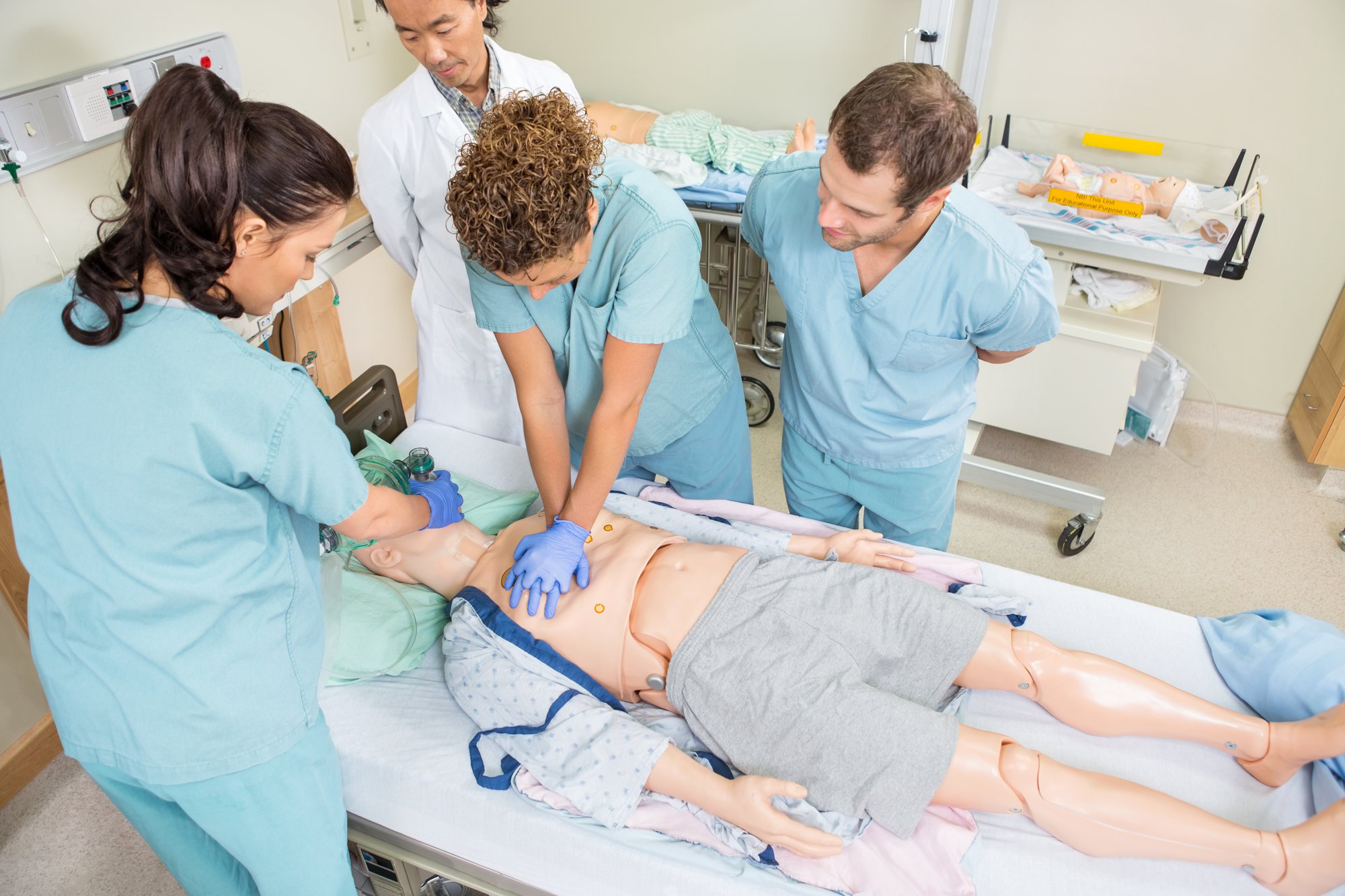
Finish all required coursework, labs, and clinical training in your program. Read an overview of nursing classes and find out what to expect from nursing school labs. - Apply for licensure and pass the NCLEX-RN (or NCLEX-PN).
After graduating, you must apply for RN licensure through your state board of nursing and pass the NCLEX-RN exam. If you chose to first study to become an LPN, you will have to take the NCLEX-PN instead. - Begin your nursing career.
Once you are licensed, you can start applying for nursing jobs in hospitals, clinics, long-term care facilities, schools, and other healthcare settings. Learn how to create a compelling nursing resume. - Continue your education and grow professionally.
Nursing is constantly evolving, so continuing education is essential. Many nurses later pursue certifications or advanced degrees to expand their skills and career options. - The first way to advance your education and take the next step in your career is to pursue a Master of Science in Nursing (MSN) degree for nurses and move into specialized or leadership roles, such as nurse practitioner, nurse educator, or nurse-midwife. Learn more about the types of Master’s in nursing degrees. At Nightingale College, you can enroll in the MSN FNP Program or the MSN PMHNP Program and work in one of the two popular specialties.
It may seem easy, but becoming a nurse can be a multi-year process of learning, preparation, and certification, before being able to practice in clinical fields. Learn more about how long you may spend in nursing school depending on your career and educational aims.
Find out everything you need to know about national and regional accreditation and ensure that the institution you choose is properly accredited.
- Master of Science in Nursing. Should you want to advance your nursing career even further, earning an MSN is the next step. An MSN degree is an advanced, post-graduate degree that will provide the skills and advanced training for more specialized roles, such as nurse educator, nurse practitioner, or nurse-midwife. Naturally, the higher you climb on the educational ladder, the better the benefits: higher compensation, more flexible schedules, less stressful work environments.
- Apply for RN licensure and take the NCLEX-RN® exam. Aside from simply applying to a program, you must actually complete its requirements, which will lead you to the next step: applying for RN licensure and taking the NCLEX-RN® exam.
- Start your nursing practice. Upon completion of a nursing program and passing the NCLEX-RN® exam, you can start looking for a job. Fortunately, nursing jobs are widely available, the growth of the field being almost double in nursing compared to other jobs. However, keep in mind that certain locations and specialties might be more competitive.
- Keep on learning. Nursing is an ever-evolving field so you must make sure you are always on top of your game in order to offer the best possible care for your patients.
What Type of Program Should You Choose?
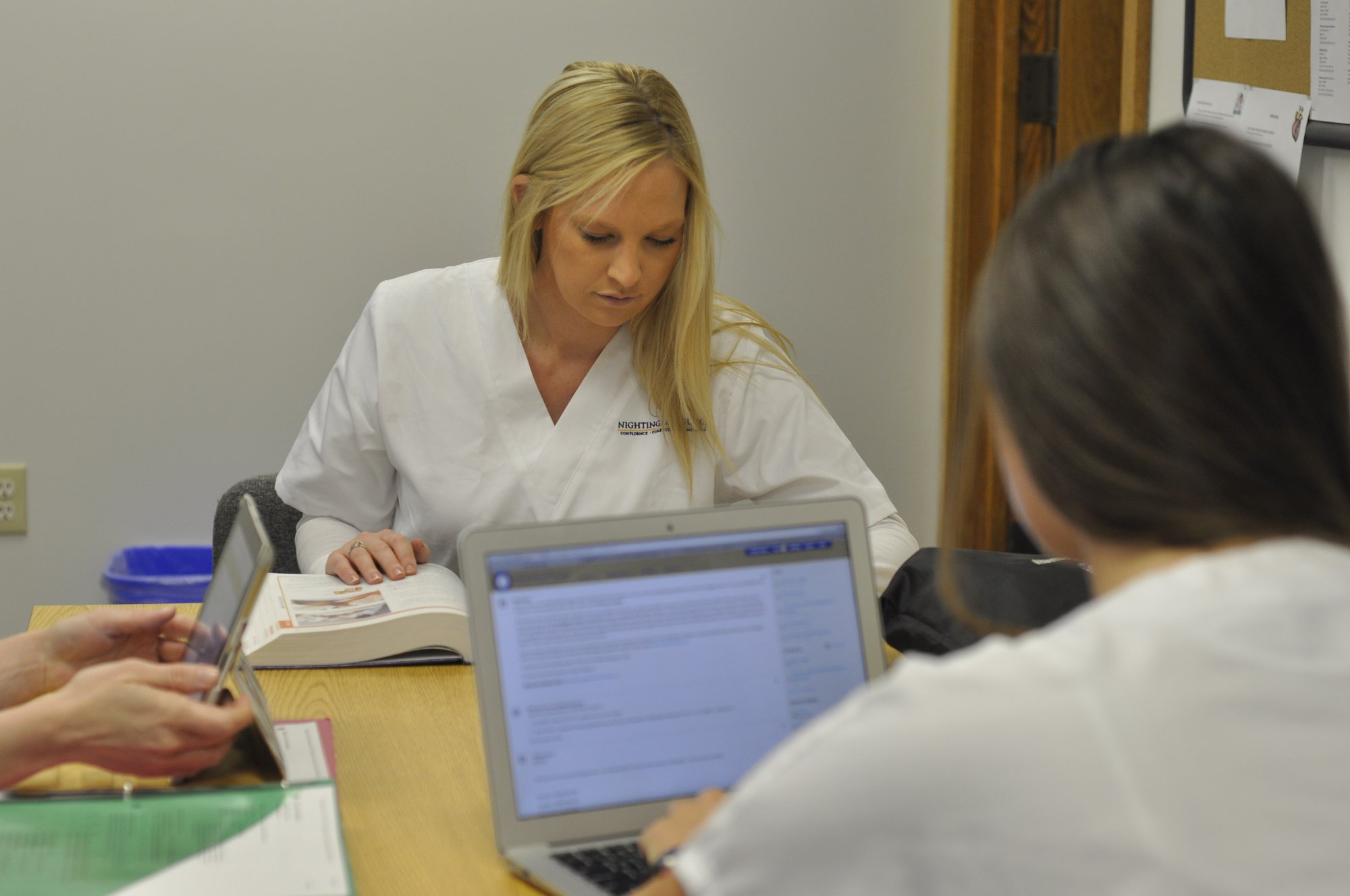
When it comes to nursing education, luckily, you have lots of options. From online to on-campus or hybrid programs – you just need to choose the best fit for you.
- On-campus BSN programs are probably the best option if you’re starting nursing from scratch. This is a good option if you don’t have to divide time with other important responsibilities, such as work or family.
- Blended-distance BSN Program. They are great if you have no prior nursing experience, but you’d like to enjoy the benefits of online education. You will engage in online coursework, combined with learning activities near home or in your community. This type of program takes as few as 32 months to complete. However, you also have the option to study at an accelerated pace and complete the program sooner.
Keep in mind that getting your BSN fully online is not possible, as most online programs have an offline component that requires you to complete labs and clinicals to get hands-on experience.
Find out everything you need to know about getting your BSN and what is the best option for you.
Nursing is a wonderful career for everyone. In healthcare, it doesn’t matter if you’re a man or a woman, young or old. All that matters is a strong passion for helping others. If you’re dedicated, empathetic, and your main drive is saving lives and making a difference, then nursing IS the right career for you. Do you have the courage to follow your calling?
If you’ve decided that nursing is the path for you, our guide on how to ace nursing school will make your life a little easier and your learning experience a lot more interesting!